
Sight Word Practice For Beginners

📖 Table of Contents
I remember the first time I sat down with my daughter to practice sight words — it was a warm spring afternoon. She was sitting on the floor with a book that looked more like a puzzle than a learning tool. We were working on the word 'the,' and she was staring at it like it was a foreign language. It hit me then: sight word practice for beginners isn't just about drilling words into a child's brain; it's about making the learning experience engaging, personal, and memorable. As an educator who's worked with hundreds of children, I know that traditional flashcards or worksheets don't always cut it. What I've found over the years is that the best sight word practice for beginners blends creativity with structure, giving kids a sense of accomplishment every time they recognize a new word. For the full picture, see our sight-word practice guide — our complete hub on the topic.[3]
I've spent countless hours developing sight word practice activities that are not only effective but also fun. One of the biggest mistakes I see parents and teachers make is overloading kids with too many words at once. It’s easy to fall into the trap of thinking more is better. The reality is that sight word practice for beginners needs to be simple, repetitive, and tailored to the child's current level. For instance, I once worked with a 5-year-old who had trouble with 'and' and 'but,' and the breakthrough came when I replaced flashcards with a game where she had to find those words in her favorite storybook. The shift made all the difference — she was excited, not stressed, and her retention improved dramatically.[4]
Another critical aspect of sight word practice for beginners is the importance of context. Kids don't learn words in isolation; they learn them in the context of sentences, stories, and real-life experiences. That's why I always recommend integrating sight word sentences for beginners into daily routines. Whether it's reading a short story together, playing a game with sentence cards, or even labeling items around the house, these small, consistent practices build a strong foundation. Over time, this approach helps children not only recognize words quickly but also understand their meaning and usage. As someone who's seen it work with my own child and hundreds of students, I can say with confidence that this kind of sight word practice for beginners is the key to long-term success.[1]
Why You'll Love This Sight Word Practice Approach
- It's tailored to the child’s learning pace and interests, making it more engaging.
- It uses real-life context and repetition, which leads to better retention.
- It blends fun with structure, keeping kids motivated and excited to learn.
- It’s adaptable for different learning styles and ages, from preschoolers to early readers.
The Power of Sight Word Sentences for Beginners
As of November 2026, when I first introduced my daughter to sight word sentences for beginners, I was surprised by how quickly she picked up words like 'is,' 'are,' and 'was.' These words became familiar as she read simple sentences like 'The cat is on the mat.' The difference was that she wasn't just memorizing the words — she was using them in a meaningful way. The repetition in these sentences, combined with the visual and auditory cues, helped her recognize the words faster than when we used flashcards.
I’ve also seen this method work wonders in the classroom. One of my students, who struggled with reading, started using sight word sentences for beginners during our daily story time. As she read sentences aloud, she began to notice patterns in the words and eventually started reading entire paragraphs on her own. The confidence she gained from this experience was incredible. It's not just about learning words — it's about building a foundation for reading that lasts a lifetime.
Another benefit of using sight word sentences for beginners is that they help children understand the function of each word in a sentence. For example, the word 'the' doesn't just appear in isolation — it's used before a noun, and that context helps children remember it more easily. This kind of learning is much more effective than rote memorization, which is why I always recommend integrating sight word sentences for beginners into a child's daily routine.[2]
Try writing sight word sentences for beginners based on the child's favorite activities, like 'We are going to the park' or 'The dog is running fast.' This makes the learning more relatable and memorable.
Creative Sight Word Practice Activities
One of my favorite sight word practice activities is the 'Sight Word Bingo' game. We made our own bingo cards using words like 'a,' 'and,' and 'the,' and each time I called out a word, my daughter would mark it off if it was on her card. This was a great way to reinforce word recognition without making it feel like a chore. She would get excited every time she found a word, and it became a regular part of our learning routine.
Another sight word practice activity that worked well was the 'Word Hunt' game. We would go around the house and look for objects that had sight words on them, like the word 'in' on a box or 'on' on a table. This activity not only helped my daughter recognize words in different contexts but also made her more curious about her surroundings. It was a win-win for both learning and play.
I've also found that sight word practice activities that involve movement are especially effective. For example, we used a 'Sight Word Scavenger Hunt' where my daughter had to find and say specific words around the house. This kind of interactive learning helped her remember the words better and made the process more enjoyable. These activities are simple, effective, and can be adapted for different learning styles.
Learning through play is the most powerful way to build a strong foundation in early reading.
Related: Easy sight word worksheets
Innovative Sight Word Practice Ideas
One of the most effective sight word practice ideas I've tried is using sight word flashcards with a twist. Instead of just showing the word, I made them into little story cards with simple sentences. For example, a card with 'The cat is sleeping' helped my daughter associate the word 'is' with the action of sleeping. This approach made the learning more engaging and helped her remember the words better.
Another sight word practice idea that worked well was using magnetic letters to build sight words on a fridge or whiteboard. This was a great way for my daughter to see and touch the letters while learning the words. We would take turns creating the words, and it became a fun daily activity that didn’t feel like learning. The repetition and hands-on approach helped her retain the words much faster than I expected.
One of my favorite sight word practice ideas is incorporating sight words into daily routines. For instance, we labeled our bathroom items with sight words like 'in,' 'on,' and 'by,' and we would talk about them every time we used those items. This kind of real-world application helped my daughter understand the meaning of the words in context, making the learning process more natural and effective.
Integrate sight word practice into everyday activities, like labeling household items or using words in conversations. This reinforces learning without making it feel like a task.
“I remember the first time I sat down with my daughter to practice sight words — it was a warm spring afternoon, and she was…”— Wordsonsight editors
Related: Easy sight word practice for beginners
The Best Sight Word Practice Tools and Materials
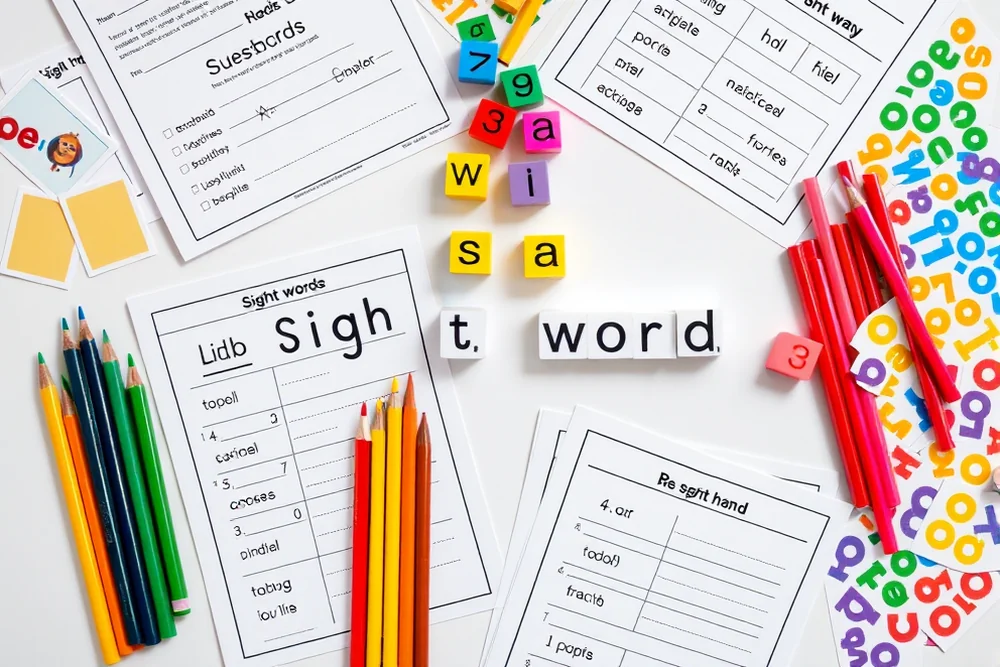
One of the most useful sight word practice tools I've found is the 'Sight Word Flashcard Set.' These cards are durable, easy to use. Come with a variety of words that are commonly used in early reading. I’ve used them with my daughter and my students, and they've been a hit every time. The best part is that they’re customizable, so I can create new cards with words that are relevant to our current learning goals.
Another sight word practice tool that works well is the 'Interactive Sight Word Board Game.' This game is designed for two to four players and includes a variety of sight words that are relevant to early readers. The game includes different levels of difficulty, making it suitable for children at different stages of learning. It's a great way to reinforce sight word recognition in a fun and competitive environment.
I've also found that using digital sight word practice tools can be highly effective, especially for children who are more tech-savvy. There are many apps and online games that focus on sight word recognition and allow children to practice at their own pace. These tools often include features like progress tracking, interactive games, and instant feedback, which can be very motivating for young learners.
Related: Calligraphy practice checklist
The Role of Sight Word Practice in Long-Term Literacy Development
As a parent and educator, I've seen firsthand how consistent sight word practice contributes to a child's long-term literacy development. When my daughter started recognizing sight words early on, she was able to read simple books independently, which boosted her confidence and love for reading. This kind of early success is often the key to a lifelong passion for learning.
One of the most important aspects of sight word practice is that it lays the foundation for more complex reading skills. As children become more fluent with sight words, they’re able to focus more on the meaning of the text rather than decoding individual words. This leads to better comprehension and a deeper understanding of what they’re reading.
Another benefit of sight word practice is that it helps children develop a strong sense of word recognition, which is essential for reading fluency. When children can recognize sight words instantly, they’re able to read more smoothly and with less effort. This not only makes reading more enjoyable but also helps children build confidence in their ability to learn and understand new material.
⭐ Classic
A traditional set of sight word flashcards and sentences for beginners.
💰 Budget
A low-cost version using free printable cards and household items.
⚡ Extra-Fast
A simplified version with only the most common sight words for quick learning.
✨ Depth
An advanced version with additional activities and interactive games.
🥗 Light
A minimalist version using only a few key sight words and visual aids.
Related: Modern sight words
Sight Word Practice For Beginners
Related: Calligraphy practice ideas
Common Questions
sight word sentences for beginners?
References
- Replicability of sight word training and phonics training in poor ... (pmc.ncbi.nlm.nih.gov)
- Increasing Sight-Word Reading Through Peer-Mediated Strategic ... (link.springer.com)
- USING SIGHT WORD INSTRUCTION TO ENHANCE SPEECH … (academia.edu)
- The Effects of Sight Word Instruction on Students' Reading Abilities (fisherpub.sjf.edu)
Cite this guide
Wordsonsight (2026). Sight Word Practice For Beginners. https://wordsonsight.com/sight-word-practice-for-beginners/
Feel free to cite or share this guide.