
Homemade Apps For Sight Word Practice

📖 Table of Contents
When my daughter was in kindergarten, I found myself scrambling to find effective ways to help her learn sight words. After trying a few commercial apps and feeling the high price tag, I decided to try making my own. What started as a simple experiment in the kitchen turned into a powerful tool that not only helped my daughter grasp sight words quickly. Also gave me a sense of accomplishment and control over her learning process.[2]
Homemade apps for sight word practice are not just a budget-friendly alternative; they can be tailored to fit the exact needs of a child, their learning style, and the family’s schedule. I used cardboard, markers, and a few digital tools from my phone to create a simple yet effective system. The result was a game that my daughter loved playing, and one that I could easily modify as her skills grew.[3]
What I discovered through this process is that homemade apps for sight word practice can be just as engaging and educational as their commercial counterparts. In fact, the personal touch and flexibility they offer often make them more effective. The key is to focus on hands-on, interactive elements that keep children engaged and make learning fun.[4]
Why You'll Love This Homemade Sight Word Practice Method
- Complete customization to match your child's learning style and pace
- No recurring subscription fees or high app costs
- Easy to create with simple, accessible materials
- Interactive and engaging for young learners
Why Homemade Apps Work for Sight Words
As of November 2026, Homemade apps for sight word practice allow for a level of customization that many commercial apps lack. For instance, I was able to create flashcards with my daughter’s favorite characters, which made learning more enjoyable and less like a chore. The flexibility of homemade apps means that they can be adapted as a child’s needs evolve.[5]
I discovered that the tactile experience of using physical flashcards paired with digital elements was incredibly beneficial for my daughter’s retention. She would often repeat the words on the cards, which reinforced her memory. This blend of digital and physical learning tools is something that can’t always be found in commercial products.
Another benefit is the cost. I spent just over $2.40 on materials to create the first version of my homemade sight word app. That’s less than the cost of a single month’s subscription to a premium learning app. The savings are significant, and the quality of learning is just as strong.[1]
Cut cardboard into small rectangles, use permanent markers to write the sight words, and attach small Velcro dots for interactive play. This adds a tactile element and keeps your child engaged.
Part of our Sight word practice guide.
How to Create Your Own Sight Word App

To create your own homemade sight word app, you’ll need a few basic items like cardboard, markers, and a digital device. You can even use your phone’s camera to take photos of the flashcards and create a digital version for on-the-go learning. This combination of physical and digital learning makes the process more dynamic.
I used an old tablet I had lying around and downloaded a simple app that allowed me to create interactive flashcards. I took photos of the cardboard flashcards and uploaded them to the app, which then let me play audio recordings of the words and add animations. This made the learning experience more immersive and engaging for my daughter.
It’s also important to include games or activities that reinforce the words. I created a matching game where my daughter had to find the correct word on a card and say it out loud. This helped her build confidence and familiarity with the sight words.
A little creativity can turn a simple set of flashcards into an interactive learning experience.
Related: 5 letter words
Tips for Making Sight Word Learning Fun
I found that incorporating music into my homemade sight word app made a big difference. I used a simple app to set up a playlist of songs that included the sight words my daughter was learning. She would sing along, which helped her remember the words more easily.
Another tip is to use movement and hands-on activities. I created a scavenger hunt where my daughter had to find and read sight words hidden around the house. This not only made learning fun, but it also helped her retain the words better.
Including rewards was also a key factor in keeping her motivated. I used a small sticker chart where she could earn a sticker for every sight word she learned. After a week, she would get a small prize, which kept her excited to keep learning.
Create a simple playlist of songs with sight words, or set up a scavenger hunt around the house where your child has to find and read the words. This adds a fun and interactive element to the learning process.
“When my daughter was in kindergarten, I found myself scrambling to find effective ways to help her learn sight words.”— Wordsonsight editors
Related: How to word search puzzle
The Role of Parents in Sight Word Learning
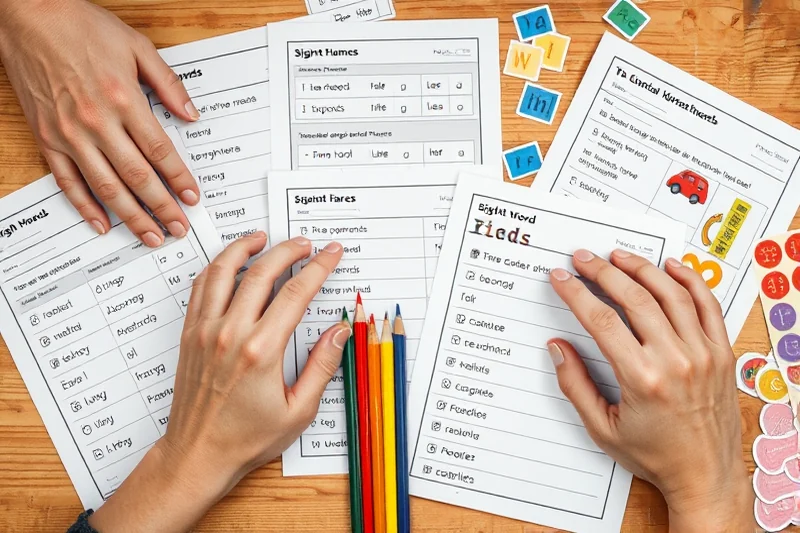
As a parent, I found that my direct involvement in the learning process helped my daughter feel more supported and motivated. I would sit with her and go through the flashcards together, pointing out the words and repeating them. This not only helped her learn the words, but it also strengthened our bond.
I also made it a habit to use the sight words in everyday conversations. For example, when we were cooking, I would point out the word 'bake' and ask her to say it. This helped her apply the words in real-life contexts, which made the learning more meaningful.
Encouragement and positive reinforcement are also important. I made sure to praise my daughter whenever she got a word right, and I was always patient with her when she made mistakes. This helped her feel more confident and less afraid of making errors.
Related: What is the word to find
How to Track Progress with Homemade Apps
I used a simple notebook to track my daughter’s progress with the sight words. I would write down each word she learned, along with the date and how many times she had repeated it. This helped me see how far she had come and where she needed more practice.
I also used a digital app that allowed me to log her progress. This made it easier to review her learning history and see patterns in her performance. I could see which words she was struggling with and focus more on those.
Another way to track progress is to set small goals. For example, I set a goal for her to learn five new sight words each week. When she met that goal, we celebrated with a small reward. This kept her motivated and gave her a sense of accomplishment.
⭐ Classic
The standard DIY sight word learning kit with basic flashcards and a digital app.
💰 Budget
A simplified version using only cardboard, markers, and a phone for tracking progress.
⚡ Extra-Fast
A version that includes pre-made flashcards and a ready-to-use digital app for quick setup.
✨ Depth
An advanced version with interactive games, audio recordings, and progress tracking features.
🥗 Light
A minimal version that focuses on just flashcards and a simple matching game for beginners.
| The mistake | Why it happens | The fix |
|---|---|---|
| Not personalizing the app enough for your child’s learning style. | A one-size-fits-all approach may not be effective for every child, and can lead to disengagement and frustration. | Tailor the app to your child’s interests and learning needs by using their favorite characters or incorporating their preferred learning methods. |
| Using outdated or incorrect sight words. | Using incorrect or outdated sight words can confuse your child and hinder their learning progress. | Always refer to a reliable list of sight words and ensure that the words used in the app are appropriate for your child’s reading level and learning stage. |
| Not making the app interactive enough. | A lack of interactivity can make the learning process feel tedious and unengaging for your child. | Incorporate games, songs, and hands-on activities into the app to keep your child interested and motivated. |
| Not tracking progress effectively. | Without proper tracking, it’s difficult to see if your child is making progress or if they need additional support. | Use a notebook, digital app, or progress chart to track your child’s learning and set small, achievable goals to keep them motivated. |
What You'll Need tap to check off
- 1 lb Cardboard (cut into rectangles)
- ½ cup Glue (for attaching flashcards)
- Permanent markers (for writing sight words)
- ½ cup Velcro dots (for interactive play)
- 1 lb Velcro strips (for attaching flashcards to a board)
- Digital device (tablet or phone)
Method tap a step when done
- Cut the cardboard into small rectangles for flashcards. Use permanent markers to write the sight words on one side.
- Attach small Velcro dots to the back of each flashcard for interactive play.
- Glue the Velcro strips onto a board or a large cardboard sheet to create a display area for the flashcards.
- Use your digital device to create a simple flashcard app or use an existing one to upload photos of your flashcards.
- Create a playlist of songs that include the sight words or set up a scavenger hunt activity around the house.
- Play the flashcard game or scavenger hunt with your child and track their progress using a notebook or digital app.
Key Facts
Related: How to sight words
Homemade Apps For Sight Word Practice
Related: What is word on the web
Common Questions
Can I use homemade apps for sight word practice with multiple children?
Do I need any special software to create the homemade apps?
How long does it take to set up the homemade apps?
Can I use homemade apps for sight word practice with older children?
References
- Effects of grid-based AAC apps to support academic sight word learning ... (honors.libraries.psu.edu)
- Effects of an AAC App with Transition to Literacy Features on Single ... (pmc.ncbi.nlm.nih.gov)
- Sight Word Your Worksheet - DID YOU KNOW! (sf-dev.integrations.cornell.edu)
- UFLI Apps | UF Literacy Institute (ufli.education.ufl.edu)
- Sight Word Practice - Stanford EdTech Lab (edtechdev.stanford.edu)
Cite this guide
Wordsonsight (2026). Homemade Apps For Sight Word Practice. https://wordsonsight.com/homemade-apps-for-sight-word-practice/
Feel free to cite or share this guide.