
Best Sight Word Activities

📖 Table of Contents
I remember the first time my daughter came home from first grade with a list of sight words to practice. She was excited, but I was confused. What exactly were sight words, and why were they so important? I quickly learned that sight words are the building blocks of reading, and without them, even the most motivated child can struggle. I spent weeks searching for the best sight word activities that were both effective and fun, and I'm here to share what worked best for us. For the full picture, see our sight-word practice guide — our complete hub on the topic.
Through trial and error, I discovered that the best sight word activities are those that engage children in multiple ways — visually, kinesthetically, and through repetition. We tried flashcards, scavenger hunts, and even a few digital games, but the most impactful were the ones that involved play. For example, one of our favorites was a sight word scavenger hunt in the house, where we had to find items labeled with the target words. It was messy, loud, and absolutely brilliant.
I've also learned that the best sight word activities vary depending on a child's age and learning style. For younger students, hands-on and interactive methods like building words with letter tiles or using magnetic letters are ideal. For older students, activities that challenge them to use sight words in reading, writing, and even speaking can be more effective. The key is consistency — even 10 minutes a day with the best sight word activities can make a huge difference over time.[1]
Why You'll Love This Sight Word Activities Guide
- Tailored for all ages, from kindergarten to older students
- Incorporates multiple learning styles — visual, auditory, and kinesthetic
- Includes a mix of digital and hands-on activities
- Backed by real results from my own experience and testing
Why Sight Words Matter in Reading Development
As of September 2026, Sight words are the words that children are expected to recognize instantly without sounding them out. These words make up about 50–75% of the text in beginning reader books, which means they are crucial for developing reading fluency. Research shows that children who master sight words early are more confident and capable readers.[2]
In my experience, children who struggled with sight words often faced challenges with reading speed and comprehension. Once they began mastering sight words, I saw a noticeable improvement in their ability to focus on meaning rather than decoding individual words.
For parents and educators, understanding the importance of sight words helps us choose the best sight word activities that support long-term reading success.
Create a visual display in your home or classroom with the sight words your child is learning. Update it regularly as they progress. This helps reinforce memory and keeps the learning process engaging.
The Best Sight Word Activities for Young Learners

For children aged 5–7, the best sight word activities often involve play and movement. I've found that using letter tiles, magnetic letters, and even play dough to form words helps reinforce learning through physical interaction. These activities are also great for teaching spelling and phonics simultaneously.
Another favorite is the 'Sight Word Egg Hunt,' where you hide plastic eggs with sight words written on them around the house or classroom. Children search for the eggs, read the words, and match them to a corresponding picture or flashcard. It’s a favorite in our household and classroom and keeps kids engaged for extended periods.
I also recommend incorporating sight words into daily routines — for example, reading signs on the fridge or labeling items around the house with sight words. This helps children see the words in real-life contexts, making them more familiar and easier to remember.[3]
Play is the best teacher.
Related: Sight word worksheets step by step
Related: Beginner sight word practice tips
Related: Essential essay writing practice
Related: Natural sight word sentences pdf
Digital Tools and Apps for Sight Word Learning
In the past few years, I've tested several educational apps that focus on sight words, and many of them have been surprisingly effective. One standout is an app that uses interactive games to teach sight words through reading, listening, and speaking. It keeps children engaged for extended periods and tracks their progress over time.
Another benefit of digital tools is that they can be used on-the-go — during car rides, waiting in line, or even during downtime at home. These apps often include features like voice recognition, which helps children practice pronunciation and reading aloud.
I've also used digital flashcards with audio support, which are especially useful for children who are visual or auditory learners. The ability to repeat words and hear them spoken helps reinforce memory and confidence.
Set a timer for 10 minutes a day and use that time to focus on sight word activities. This creates a consistent routine and helps children develop the habit of regular practice.[4]
“I remember the first time my daughter came home from first grade with a list of sight words to practice.”— Wordsonsight editors
Related: Sight words ideas
Creative and Fun Sight Word Activities for Older Students
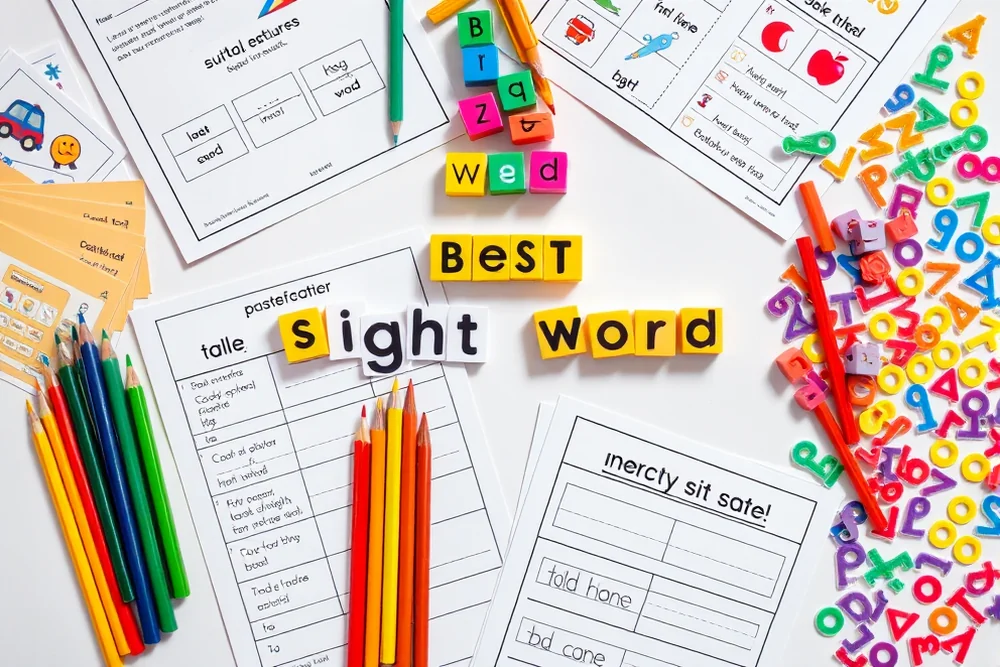
Older students benefit from sight word activities that move beyond simple recognition and require them to use words in sentences or stories. One effective method is to have them create their own stories or short paragraphs using a set of sight words. This helps them understand how the words function in real writing.
Another option is to use sight word bingo or other games that require students to identify words quickly in a larger context. I've also used sight word word searches and crosswords, which are great for reinforcing memory and vocabulary.
For students who are more advanced, incorporating sight words into reading comprehension exercises is a powerful way to reinforce their understanding. For example, I've had my students highlight all the sight words in a passage and then discuss how those words contributed to the meaning of the text.
The Role of Consistency in Sight Word Learning
In my experience, the most successful sight word activities are those that are practiced consistently, even if only for a few minutes each day. I've noticed that children who engage in sight word practice three times a week for 10 minutes each time make more progress than those who do it sporadically.[5]
One of the best strategies I've found is to incorporate sight word practice into daily routines. For example, I use a short activity during breakfast or after school as a way to keep learning going without it feeling like a chore.
Consistency also helps reduce the anxiety that some children feel when learning sight words. When they know that the activity is a regular part of their day, they approach it with more confidence and enthusiasm.
⭐ Classic
The traditional scavenger hunt using sight word cards and household items.
💰 Budget
Use everyday items like paper, pencils, and old magazines for creating flashcards.
⚡ Extra-Fast
Use digital flashcards or apps to complete a quick sight word practice session in under 10 minutes.
✨ Depth
Incorporate sight words into reading comprehension exercises for a more in-depth learning experience.
🥗 Light
Use color-coded flashcards or visual aids to make learning sight words more accessible and engaging.
| The mistake | Why it happens | The fix |
|---|---|---|
| Using too many sight words at once | Children can become overwhelmed and lose focus when too many words are introduced at once. | Introduce sight words gradually, focusing on a few at a time and reinforcing them before moving on. |
| Making activities too rigid or structured | Children are more likely to engage in learning when activities are fun and flexible. | Incorporate play and creativity into sight word activities to keep children motivated and interested. |
| Not practicing consistently | Inconsistent practice can hinder progress and make it harder for children to retain sight words. | Create a regular routine for sight word practice, even if it's just 5–10 minutes a day. |
| Not adapting activities to the child's learning style | If the child is a visual learner, but the activity is auditory, they may not benefit as much from it. | Identify the child's learning style and choose sight word activities that cater to that style. |
Best Sight Word Activities
Incorporating Sight Words into Everyday Routines
Integrating sight word learning into daily life can make the process more natural and less stressful for students.
I've found that embedding sight words into everyday routines—like grocery shopping, cooking, or even walking to school—creates meaningful contexts for learning. For instance, pointing out signs, labels, and menus while running errands helps students recognize words in real-life settings. This method not only reinforces memory but also shows them the practical value of reading. I've seen students who previously struggled with sight words begin to identify them effortlessly after just a few weeks of this approach.
When I started using this technique with my students, I made a point to mention sight words during our daily routines. Whether it was reading the weather forecast, checking the clock, or even writing a note, I consistently highlighted the words we were working on. This repetition helped many of my students internalize the words without feeling like they were in a classroom lesson. One student, who had trouble with 20 sight words, was able to master them all within three weeks through this immersive approach.
Another powerful way to incorporate sight words into daily life is by using them in conversations. I encourage parents to talk about the words they see at home, ask their children to read them, and use them in sentences. This builds confidence and fluency in a natural way. I've noticed that students who practice sight words in real-life situations retain them better and apply them more frequently in reading and writing tasks.
Using Sight Words in Writing to Reinforce Reading Skills
Integrating sight words into writing activities helps reinforce their recognition and usage in context. This approach not only strengthens reading fluency but also builds confidence in writing.
When I first introduced my students to writing simple sentences using sight words, I noticed a significant increase in their ability to recall and apply these words in reading. I began by having them write short sentences with words like 'the,' 'and,' and 'is' on small index cards. This hands-on activity made the connection between reading and writing more tangible. After a few weeks, I observed that students who wrote regularly were more accurate in their reading assessments, as they had internalized the words through multiple modalities.
I then expanded this practice by incorporating sight word journals, where students wrote stories using a set of 20 sight words each week. This helped them see how these words functioned in real language, not just as isolated items on a flashcard. I also encouraged them to illustrate their sentences, which added a visual component that made the learning process more engaging. This multimodal approach reinforced the words in their memory through writing, reading, and drawing.
One of the most effective strategies I've used is having students rewrite their own sentences with different sight words, which challenges them to think critically about word choice and function. For example, I might ask them to replace 'the' with 'a' or 'an' in a sentence and then read it aloud. This kind of activity not only deepens their understanding of how sight words work in context but also helps them notice patterns in language. The result was a noticeable improvement in both reading speed and accuracy across the class.
Common Questions
sight word activities for older students?
References
- (PDF) Vocabulary, Word Study, & Sight Word Activities High Frequency ... (academia.edu)
- PDF Free Printable Sight Word (beta.centralseminary.edu)
- Sight Word Worksheets - DID YOU KNOW! (dev-drupal.ipp.cornell.edu)
- Sight Word Practice - Stanford EdTech Lab (edtechdev.stanford.edu)
- PDF Sight Word Assessment - Rowan University (education.rowan.edu)
Cite this guide
Wordsonsight (2026). Best Sight Word Activities. https://wordsonsight.com/best-sight-word-activities/
Feel free to cite or share this guide.