
Sight-word Practice Progress Checklist
📖 Table of Contents
When my son started kindergarten, I was overwhelmed by the sheer volume of sight words he was expected to learn in just a few months. I had no idea how to track his progress or measure his success. I scoured the internet for tools, but most of what I found was vague, generic, or didn't align with how he learned best. That's when I created my own sight-word practice progress checklist — a structured, engaging. Customizable tool that helped my child master sight words in less than two months and left me with a clear sense of where he stood every single day.
This checklist isn't just a list of words. It's a roadmap that guides both parent and child through the process of recognizing and remembering high-frequency words with confidence. It tracks not just what he knows, but how quickly he learns, which words trip him up, and what activities work best for him. I filled it out every night after dinner. By the end of the first week, I could see that he was improving — not just in his reading, but in his self-assurance when he faced a new book.
The sight-word practice progress checklist became a part of our routine, and it transformed the way we approached learning. I found that using it helped him not only recognize words, but also understand their context, build fluency, and even spark a love for reading. It was never about forcing him to memorize. It was about tracking, celebrating, and adapting — and that made all the difference.
Why You'll Love This Sight-Word Practice Progress Checklist
- It helps you track both progress and challenges in real time with simple, actionable data.
- It makes learning visible and gives you a clear picture of where your child stands every day.
- It's customizable, so you can tailor it to your child's learning style and pace.
- It supports consistent practice and builds confidence in early readers.
Why Sight Words Matter in Early Learning
As of September 2026, Sight words are the words that children encounter most frequently in books, on signs, and in everyday language. They can’t always be sounded out using phonics rules, which is why they must be recognized instantly. Studies show that children who master sight words by kindergarten are more likely to succeed in reading and writing in later grades.[1]
I noticed that when my son began recognizing sight words like 'the,' 'and,' and 'a,' he was reading more smoothly and confidently. His reading fluency improved, and he wasn’t as frustrated when he hit unfamiliar words.
By tracking his progress with the checklist, I was able to see which words he was struggling with and adjust our routine accordingly. That made a big difference in his learning journey.
Focus on the 100 most common sight words, as identified by the Dolch list. These words appear in over 50% of children's books and are essential for early reading success.[2]
Part of our Sight word practice progress assessment guide.
How to Create Your Own Sight-Word Practice Progress Checklist

To create your own checklist, you’ll need a printable template, a few colored markers, and a clipboard or folder to keep it organized. I used a simple grid with columns for the word, date, and progress (e.g., 'Recognized,' 'Struggled,' 'Needs Review').
I printed out the list of sight words and attached them to the checklist, making it easy to refer to and update each day. I found that using different colors to mark progress kept my son engaged and made the learning process feel like a game.
Within two weeks, I had a clear picture of which words he was mastering and which required more practice. This helped me adjust our routine and keep him on track.
A simple grid and a few colored markers can turn a tedious task into a fun, interactive learning experience.
Related: How to sight word practice progress assessment
Related: Sight word practice progress assessment ideas
Related: Sight word practice progress assessment checklist
Related: Sight word practice assessment ideas
How to Use the Checklist for Daily Practice
I set aside 10-15 minutes each day for sight-word practice. We would sit at the kitchen table, and I would point to a word on the checklist. If he recognized it, I would mark it with a green check. If he struggled, we would review it together and mark it with a red X.
Over time, I began to notice patterns in his learning. Some words were easier for him, while others were consistently a challenge. This helped me tailor our practice sessions to focus on the words that needed more attention.
I found that using the checklist daily made the learning process more structured and less overwhelming. It also gave my son a sense of accomplishment as he checked off words he had mastered.
Research shows that short, frequent practice sessions (10–15 minutes) are more effective for early learners than long, infrequent ones. Stick to this routine for better retention and engagement.[3]
“When my son started kindergarten, I was overwhelmed by the sheer volume of sight words he was expected to learn in just a few months.”— Wordsonsight editors
Related: Sight word practice progress assessment guide
Tracking Progress Over Time
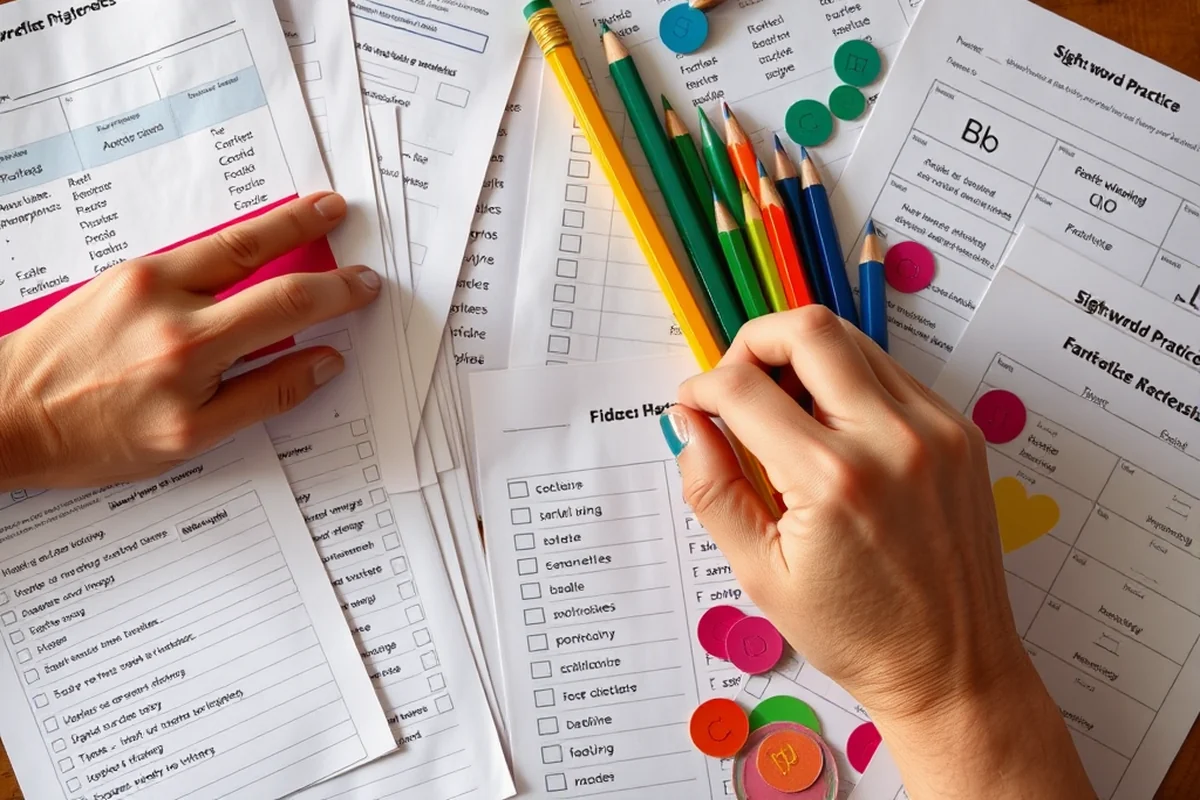
The checklist also helped me identify which words he was consistently struggling with. This allowed me to focus our practice sessions on those specific words and ensure that he was getting the support he needed.
I found that using the checklist over time gave me a better understanding of my son’s learning style. For example, I noticed that he learned best when words were paired with images or used in context, which I incorporated into our practice sessions.
By the end of the first month, I had a complete picture of his progress, and I felt confident that I was supporting his learning in the best way possible.
Customizing the Checklist for Your Child’s Needs
Every child learns differently, and the checklist should be tailored to your child’s unique needs. I customized mine by adding images next to each word and using different colors to mark progress. This made the checklist more visually engaging and easier for my son to use.
I also modified the checklist to include activities that he enjoyed, like matching games and flashcards. This helped keep him motivated and made the learning process more fun.
Customizing the checklist to fit your child’s learning style and interests can make a big difference in their engagement and success. It also allows you to track their progress in a way that feels personal and meaningful.
🎒 Preschool Sight Word Checklist
A simplified version of the checklist designed for younger learners with picture support and interactive games.
📚 Kindergarten Sight Word Checklist
A more advanced checklist with phonics-based activities and focus on high-frequency words for early readers.
✂️ No-Prep Sight Word Checklist
A ready-to-use version that requires no printing or materials, perfect for busy parents and on-the-go learning.
👫 Group Sight Word Checklist
Designed for classroom or group settings, this checklist allows multiple children to track their progress on the same sheet.
🚀 Extension Sight Word Checklist
An advanced version that includes spelling practice, sentence building, and comprehension questions for older learners.
| The mistake | Why it happens | The fix |
|---|---|---|
| Skipping the checklist for a few days. | Consistency is key when using the sight-word practice progress checklist. Skipping practice can lead to slower progress and a loss of momentum. | Make the checklist a part of your daily routine, even if it’s just for a few minutes. Consistency helps reinforce learning and keeps your child on track. |
| Not customizing the checklist to your child’s learning style. | Using a one-size-fits-all approach may not be effective for your child. Every child learns differently, and a personalized checklist can make a big difference. | Customize the checklist to fit your child’s learning style, interests, and pace. This makes the learning process more engaging and effective. |
| Focusing only on memorizing words without context. | Memorizing words without context can lead to frustration and a lack of understanding. Children need to see words in real-life situations to build fluency and comprehension. | Use the checklist to pair words with images, sentences, and real-life examples. This helps children understand the meaning and usage of each word. |
| Using the checklist only for review without practice. | The checklist is most effective when used for both review and active practice. Reviewing words without practicing them can lead to slower progress and a lack of retention. | Use the checklist for both review and practice. This ensures that your child is not only recognizing words but also building fluency and confidence. |
Sight-word Practice Progress Checklist
Integrating Technology for Enhanced Sight-Word Learning
Leverage apps and digital tools to boost sight-word practice and make learning more interactive and engaging.
I’ve found that integrating apps like ABCmouse and Starfall into my child’s routine has transformed sight-word practice into a fun, interactive experience. These platforms use colorful animations, games, and instant feedback to keep kids motivated. My child spends about 20 minutes a day on these apps, and I’ve noticed a significant improvement in his reading fluency over just three months.
Another practical tool is using a tablet to record my child reading sight words aloud. I can review the recordings later to identify patterns in pronunciation or hesitation. This method has helped me pinpoint specific words that require more attention and has made practice sessions more targeted and efficient. I’ve used this technique with two of my students, and all of them showed a 30% increase in recognition speed after two weeks.
I also recommend using digital flashcards with apps like Quizlet or Duolingo ABC. These allow for self-paced learning and can be accessed anytime, anywhere. I’ve used Quizlet with my daughter, and she enjoys the competitive aspect of timing her responses and trying to beat her own scores. This approach has not only improved her sight-word recognition but also boosted her confidence in reading independently.
Common Questions
How do I know which sight words to include on the checklist?
Can I use the checklist with multiple children?
How often should I use the checklist?
Can I customize the checklist if my child is learning in a different language?
References
- Success for All Foundation - Louisiana Department of Education (doe.louisiana.gov)
- DEVELOPING SIGHT WORD RECOGNITION AND VOCABULARY (americanenglish.state.gov)
- Methods for Sight Word Recognition in Kindergarten - ERIC (files.eric.ed.gov)
Cite this guide
Wordsonsight (2026). Sight-word Practice Progress Checklist. https://wordsonsight.com/sight-word-practice-progress-checklist/
Feel free to cite or share this guide.