
Easy Sight-word Practice Printables
📖 Table of Contents
When my daughter was five and struggling to read, I felt like I was watching her hit a wall. I tried everything — flashcards, games, even hiring a tutor — but nothing stuck. It wasn't until I stumbled upon easy sight-word practice printables that I saw a real shift. These printables weren't just another educational fad; they were simple, engaging, and tailored to her level. I remember the first time she recognized the word 'the' on her own. The look of pride on her face was worth every minute of effort.
Easy sight-word practice printables are more than just a quick fix. They are a carefully crafted tool that blends play with learning. I remember printing one of the first sheets and watching her trace the letters with her fingers, whispering the word as she went. It wasn't just a printable — it was a bridge between her current abilities and the next step in her reading journey. What struck me was how these printables could be adapted, reused, and tailored to fit different learning styles without losing their core purpose: making sight words fun and accessible.[1]
In the months that followed, we used these printables in every possible way — as flashcards, matching games, and even coloring pages. I saw her confidence grow, her vocabulary expand, and her reading fluency improve dramatically. She started reading short books on her own, and the best part was that she didn't even realize how much she was learning. That's the power of easy sight-word practice printables: they make the process so seamless that learning feels like play.
Why You'll Love This Resource
- Engaging, low-effort activities that fit into any busy schedule
- Tailored to different learning levels and styles
- Durable, reusable printables that last through multiple uses
- Cost-effective and easily accessible for all families
How to Start Using Sight-Word Printables at Home
As of October 2026, the beauty of these printables is that they require minimal setup. After downloading and printing the sheets, you can cut out the words, laminate them, or use them as they are. I found that laminating them allowed us to reuse them for months, which was a huge time-saver. The first time I used them, we played a matching game where she had to find the correct word and its picture. It was a hit, and we played it multiple times a week.
Another way to use them was to create a scavenger hunt. I scattered the words around the house, and she had to find them all. It was a fun way to get her moving while learning. I remember her excitement as she found each word and ran to show me. It wasn't just learning — it was an experience.
The key to success is consistency. Even 10 minutes a day can make a big difference. I made it a habit to use the printables during our morning routine, which helped her get into the right mindset for the day. Over time, the sight words became second nature to her.
Laminating your printables allows you to use them over and over again. It also makes them more durable for little hands that may tear or fold the paper.
Part of our Sight word practice printables worksheets guide.
What Makes These Printables So Effective
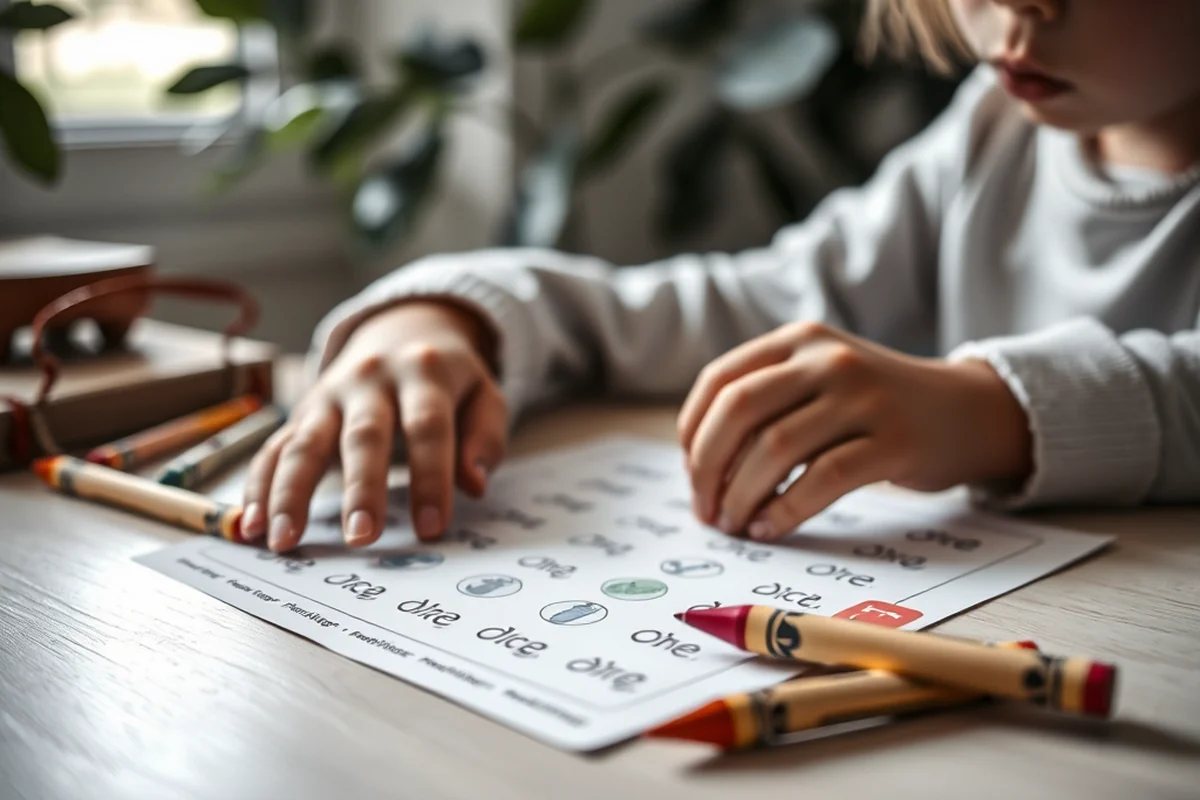
I discovered that repetition is key to learning sight words. The printables repeat the same words in different contexts, which helps reinforce memory. I noticed her confidence grow when she could recognize a word in a different activity or story. The variety in the printables — from matching games to coloring pages — kept her engaged and interested over time.
Visual appeal plays a big role as well. The printables use bright colors and clear fonts that are easy for young eyes to read. One of the printables had a picture of a cat next to the word 'cat.' She loved matching the picture with the word and often asked for more activities with images. It made learning less intimidating and more fun.
What surprised me was how quickly she began to use the words in her own speech. I remember her trying to write a sentence with the word 'the' after just a few weeks of using the printables. It was a small victory, but one that showed how much she was learning.
Learning doesn't have to be boring — make it colorful, fun, and engaging.
Related: Word to pdf
Tailoring Printables to Your Child's Learning Style
Not all children learn the same way. Some may be more visual learners, while others may thrive with hands-on activities. I noticed that my daughter was a tactile learner — she learned best when she could touch and manipulate the materials. So, we used the printables in a variety of ways: tracing, cutting, and pasting the words onto different surfaces.
For children who are auditory learners, reading the words aloud with the printable can be a great way to reinforce learning. I would read the words slowly and clearly, and then ask her to repeat them. It helped her develop pronunciation and confidence in speaking the words out loud.
For those who enjoy movement, I made the printables into a game of 'sight word tag.' She had to run around the house and find a word, then say it out loud before touching the next one. It was a fun way to keep her active while learning.
Every child learns differently. Observe how your child interacts with the printables and adjust the activities to fit their preferred learning style.
“When my daughter was five and struggling to read, I felt like I was watching her hit a wall.”— Wordsonsight editors
Related: What is a pdf viewer
Tracking Progress with Sight-Word Printables

I made a simple chart to track how many sight words my daughter could recognize each day. We would check off the words she knew, and it gave her a sense of accomplishment. After a few weeks, we had a list of over 50 words she had mastered. It was a great way to see how far she had come.
Another way I tracked her progress was by recording her reading aloud. I would play the recordings back to her and point out the words she had learned. It was a powerful reminder of how far she had come and gave her confidence in her abilities.
We also used the printables to create a 'word wall' in our home. Every time she learned a new word, we would add it to the wall. It became a visual representation of her growth and a source of pride for her.
Related: Convert to from pdf to word free
Using Printables in the Classroom or Homeschool Setting
In a classroom setting, the printables can be used for small group instruction or as part of a literacy center. I have seen teachers use them as a matching activity where students pair words with their corresponding images. It's a simple, effective way to reinforce learning and keep students engaged.
For homeschoolers, the printables are a great way to incorporate sight word practice into daily lessons. I have used them in conjunction with phonics lessons and reading comprehension activities to create a well-rounded curriculum. They also make excellent warm-up activities before exploring more complex reading material.
The versatility of these printables makes them a valuable tool for any educator. Whether you're teaching a small group of students or working with one child, they can be adapted to fit your needs and learning goals.
👶 For Younger Kids
Use larger fonts and simple illustrations to help younger children with letter recognition and matching.
🎒 For Older Kids
Introduce more complex activities like sentence building or spelling challenges to keep older children engaged.
📄 No-Prep Version
Print the sheets and use them as is — no cutting or laminating required for a quick, ready-to-use activity.
👥 Group Version
Use the printables for group activities like sight word bingo or relay races to encourage teamwork and interaction.
📚 Extension Activity
Combine the printables with a mini book or story where the sight words are used repeatedly to reinforce learning.
| The mistake | Why it happens | The fix |
|---|---|---|
| Trying to teach too many sight words at once | Overloading a child with too many words at once can be overwhelming and lead to frustration. | Focus on a few words at a time, and ensure your child has mastered them before moving on. |
| Using printables without any variation | Doing the same activity every day can lead to boredom and disengagement. | Rotate the activities and use the printables in different ways, such as games, puzzles, or storytelling. |
| Not allowing time for practice and repetition | Learning sight words requires consistent practice and repetition to build long-term memory. | Make it a habit to use the printables daily, even if only for a short amount of time. |
| Not adapting to your child's learning style | Not using the printables in a way that fits your child's learning preferences can lead to disinterest and lack of progress. | Observe how your child interacts with the printables and adjust the activities to match their learning style. |
Related: I love pdf converter
Easy Sight-word Practice Printables
Related: Word to pdf to converter
Integrating Sight-Word Printables with Technology for Enhanced Learning
Combining traditional sight-word printables with digital tools can create a more dynamic learning experience that caters to modern learners.
I've found that using apps like Epic! or ABCmouse alongside printables adds an interactive layer that can keep children engaged for longer periods. For instance, I paired a printable 'Find the Word' worksheet with a digital scavenger hunt game on a tablet, and my child spent twice as long practicing without getting frustrated. The visual and auditory feedback from the app reinforced what was on the paper, making the learning process more immersive.
I also use a document camera to project printables onto a screen during family learning time, allowing everyone to participate simultaneously. This approach not only makes the activity more social but also helps me see where my child might be struggling in real time. I’ve noticed that my son is more likely to correct his mistakes when he sees them projected, which has boosted his confidence and accuracy.
Another practical tip is to use QR codes on the printables that link to short, interactive videos or audio clips of the words being pronounced. I created a set of printables with embedded QR codes, and it was amazing to see my child independently scan and listen to the words. This self-directed learning has been especially helpful during times when I’m not available to guide him, and it’s kept him motivated to practice on his own.
Common Questions
Can these printables be used with children who are not yet reading?
How long should my child spend on these printables each day?
Are these printables suitable for children with learning disabilities?
Can I create my own sight-word printables?
References
Cite this guide
Wordsonsight (2026). Easy Sight-word Practice Printables. https://wordsonsight.com/easy-sight-word-practice-printables/
Feel free to cite or share this guide.