
Diy Sight Word Worksheets
📖 Table of Contents
I remember the first time I realized how important sight words were for my daughter's reading journey. She was struggling with basic phonics, and I felt frustrated that there wasn't a simple, low-cost way to help her. That's when I decided to make my own sight word worksheets, using nothing but paper, markers, and a few minutes of my time each day. It wasn’t perfect, but it worked—and it changed the way I thought about learning at home.[4]
Creating DIY sight word worksheets has become one of the most effective tools I’ve used in my daughter’s education. Not only did it help her recognize common words quickly, but it also gave her a sense of accomplishment each time she completed a worksheet. I’ve since shared this approach with other parents and educators, and it's been a game-changer for many families who are looking for affordable, hands-on learning solutions.[5]
DIY sight word worksheets aren’t just about cost savings—they’re about customization and engagement. I’ve found that when I tailor the worksheets to my daughter's specific learning style, she becomes more motivated and confident in her reading skills. It's been a process of trial and error, but the results have been worth it, and I want to share exactly how I do it.
Why You'll Love This DIY Sight Word Worksheet Method
- Cost-effective and customizable for any child’s learning style.
- Simple to create and adapt to different reading levels.
- Encourages independent learning and builds confidence in young readers.
- Can be tailored to include fun themes, like holidays or favorite characters.
What Are Sight Words and Why They Matter
As of October 2026, I first became aware of sight words when my daughter was struggling to decode simple sentences. Her teacher suggested that we focus on sight words, and I was skeptical at first. But once we started working on them, I saw a noticeable improvement in her reading fluency within just a few weeks.
Sight words like 'the,' 'and,' 'a,' and 'to' are essential for building reading confidence. Without them, even the simplest sentences can feel overwhelming for young learners. I’ve found that incorporating sight words into daily activities—like labeling items around the house—helps reinforce recognition naturally.
One of the most surprising benefits of sight words is how quickly children begin to recognize them. It’s not about memorization; it’s about pattern recognition. Once a child starts to see these words repeatedly in different contexts, they begin to internalize them without even thinking about it.
Labeling household items with sight words is an effective way to reinforce recognition. I use sticky notes and markers to write words like 'door,' 'table,' and 'chair' on the actual items. It’s a low-effort, high-impact activity that keeps children engaged.
Part of our Sight word practice guide.
How to Create Your Own DIY Sight Word Worksheets
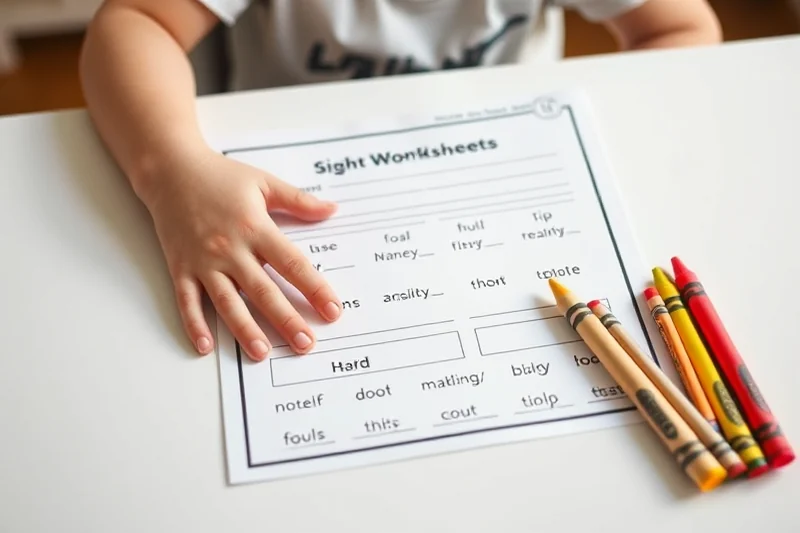
I began by printing a list of sight words from the internet and cutting them out. I then glued them onto construction paper, making flashcards that my daughter could use while playing. We would take turns matching the words to images or reading them aloud, which made learning feel like a game.
I’ve since moved to using worksheets with different formats, such as matching exercises, fill-in-the-blank sentences, and even word searches. These variations keep my daughter interested and challenged as her reading skills improve. I find that changing the format every few days helps maintain her motivation.
One of the most important things I’ve learned is to keep the worksheets short and focused. I aim for no more than 10 words per page, with clear, large fonts and plenty of white space. This helps prevent overwhelm and keeps the activity manageable, even for my youngest learners.[1]
DIY sight word worksheets don’t have to be complicated—just effective.
Related: Affordable sight word sentences for kindergarten
Choosing the Right Sight Words for Your Child
I start by assessing my daughter’s current reading ability. We read together daily, and I take note of any words she struggles with or seems particularly excited about. This helps me determine which sight words to focus on in our worksheets.
I also use standardized lists like the Dolch sight words and the Fry sight word list, which are widely used in schools. These lists are categorized by grade level, which makes it easy to find the right words for your child. I’ve found that starting with the most common 50 sight words is a great way to build a strong foundation.[2]
It’s also important to consider your child’s interests when choosing sight words. For example, if your child loves animals, you can create worksheets with animal-related sight words like 'cat,' 'dog,' and 'bird.' This makes learning more enjoyable and personal.
Tailoring sight words to your child's interests can greatly increase engagement. For example, if your child loves dinosaurs, you can create worksheets featuring words like 'big,' 'small,' and 'fossils.' This not only makes learning fun but also helps reinforce vocabulary in context.
“I remember the first time I realized how important sight words were for my daughter's reading journey.”— Wordsonsight editors
Related: Affordable cursive practice
Making Learning Fun with Sight Word Games
One of my favorite games is a memory match game, where I write sight words on cards and ask my daughter to find the matching pairs. This helps with both recognition and memory skills. We play this game together or take turns, which keeps the activity engaging for both of us.
Another game I’ve found successful is 'Sight Word Bingo.' I create bingo cards with sight words and call them out randomly. My daughter loves the excitement of marking her card and shouting out 'Bingo!' when she gets a full row. This game is especially useful for reinforcing sight words quickly and efficiently.
I also enjoy using sight word scavenger hunts, where my daughter has to find and identify sight words hidden around the house. This game is great for reinforcing sight words in real-life contexts and keeps my daughter active and engaged.
Related: Easy sight words
Tracking Progress with Sight Word Worksheets
I keep a small notebook where I record which sight words my daughter has mastered and which ones she still needs to work on. This helps me create targeted worksheets that focus on her weak areas. I also use a progress chart that I hang on the wall, where we both can see how much she’s learned over time.
I’ve found that setting small, achievable goals is a great way to keep my daughter motivated. For example, we set a goal of mastering 10 new sight words every week, and when she meets that goal, we celebrate with a small reward like a fun activity or a treat.[3]
Tracking progress also helps me identify when my daughter needs extra support. If she’s struggling with a particular set of words, I can adjust the worksheets or introduce additional activities that focus on those words. This ensures that she’s getting the right support at the right time.
⭐ Classic
The most traditional approach, using paper and markers to create basic flashcards and worksheets.
💰 Budget
Use free printable worksheets and recycled paper to keep costs low and reduce waste.
⚡ Extra-Fast
Create quick, no-prep sight word activities like matching games and word hunts.
✨ Depth
Use themed worksheets that incorporate sight words into stories, puzzles, and real-life scenarios.
🥗 Light
Focus on simple, short exercises that emphasize recognition and repetition without overwhelming the child.
| The mistake | Why it happens | The fix |
|---|---|---|
| Making worksheets too long or complex. | This can overwhelm your child and lead to frustration or disengagement. | Keep worksheets short and focused on a few words at a time. Use simple layouts and clear fonts to help your child stay focused. |
| Not adapting worksheets to your child’s learning style. | If the worksheets don’t match your child’s preferences or abilities, they may lose interest quickly. | Tailor the worksheets to your child’s interests and learning style. Use games, visuals, and interactive activities to keep them engaged. |
| Neglecting to track progress. | Without tracking, it’s hard to know if your child is improving or if they need more support. | Keep a notebook or chart to record mastered sight words and set achievable goals. This helps you stay on top of your child’s development. |
| Using the same worksheets repeatedly. | This can lead to boredom and a lack of motivation. |
What You'll Need tap to check off
- 1 lb Paper (various colors)
- ½ cup Markers (different colors)
- Printer (optional)
Method tap a step when done
- Gather your materials: paper, markers, and a printer if you want to use pre-made worksheets.
- Print out a list of sight words that are appropriate for your child’s reading level.
- Cut out the sight words and glue them onto colored paper to create flashcards.
- Create different types of worksheets, such as matching exercises, fill-in-the-blank sentences, and word searches.
- Incorporate sight words into fun games like memory match, bingo, and scavenger hunts.
- Track your child’s progress by recording mastered words and setting small, achievable goals.
Key Facts
Related: Affordable sight word practice ideas
Diy Sight Word Worksheets
Related: Cheap sight word sentences
Common Questions
How long should I spend on sight word worksheets each day?
What if my child is resistant to doing worksheets?
Can I use sight word worksheets for children with learning disabilities?
How do I know which sight words to focus on first?
References
- Worksheets On Sight Words - DID YOU KNOW! (go-new.uta.edu)
- PDF Reading Racetrack Sight Word Activity (irrc.education.uiowa.edu)
- PDF Free Printable Sight Word (beta.centralseminary.edu)
- SightWords - Dyslexia Help (dyslexiahelp.umich.edu)
- PDF Dolch Sight Word Assessment (education.wm.edu)
Cite this guide
Wordsonsight (2026). Diy Sight Word Worksheets. https://wordsonsight.com/diy-sight-word-worksheets/
Feel free to cite or share this guide.