
Sight-word Practice Games For Beginners
📖 Table of Contents
I still remember the first time my son, then 4 years old, looked at the word 'the' on a picture book and said, 'That's the word we always say!' It was one of those small, proud moments as a parent that made me realize how critical sight-word practice games for beginners are. At that point, he had been playing a simple card-matching game with me for just over a week, and the progress was tangible. Sight words are the building blocks of reading, and without a fun, engaging way to practice them, even the most eager young learners can lose interest quickly.[1]
When I first started exploring sight-word practice games for beginners, I was overwhelmed by the sheer number of options. Some were too complex, others too simplistic, and many didn't align with what my son actually needed. I learned that the most effective games are those that are short, interactive, and tailored to the child's attention span. My son, for example, could only focus on a game for about 10 minutes at a time, which meant the activity had to be both fast-paced and rewarding. I began creating our own games, using flashcards and simple rules, and slowly, I saw his confidence grow.
Sight-word practice games for beginners are not just about memorization—they're about repetition, engagement, and fun. I quickly realized that the best games were the ones that didn't feel like work. We played with magnetic letters on the fridge, turned flashcards into a memory game, and even made a scavenger hunt where he had to find real-life examples of the words in our home. These small, everyday activities kept him excited and involved, and over time, he began recognizing words with ease. It wasn't just about learning; it was about building a foundation for lifelong reading success.[2]
Why You'll Love This Sight-Word Practice
- Interactive and engaging for young learners
- Builds foundational reading skills through fun
- Adaptable for different age groups and learning styles
- Easy to set up and requires minimal materials
Why Sight-Word Practice Games Work for Beginners
As of October 2026, I began to see how sight-word practice games for beginners worked best when they were played in short bursts, with clear objectives and immediate rewards. My son's favorite was a matching game where he would flip over two cards at a time, trying to find pairs of the same word. After a few rounds, he started to recognize the words without even looking at the pictures, and it was incredible to witness.
What struck me was how these games could be modified to suit different learning styles. For visual learners, I used colorful flashcards and magnetic letters. For kinesthetic learners, we played a game where he had to physically jump on the right answer on a giant board I created with tape on the floor. Each variation helped my son connect with the material in a way that felt right for him.
The key is to keep the games simple and consistent. I found that when the rules were clear and the activities were short, my son stayed focused and eager to play. Over time, he began to recognize words with ease, and it was clear that these games were more than just a fun activity—they were a critical part of his reading development.
For younger children, keep the rules straightforward and the rewards immediate. Use bright colors and simple visuals to make the games more engaging and memorable.
Part of our Sight word practice activities games guide.
How to Choose the Right Sight-Word Practice Game
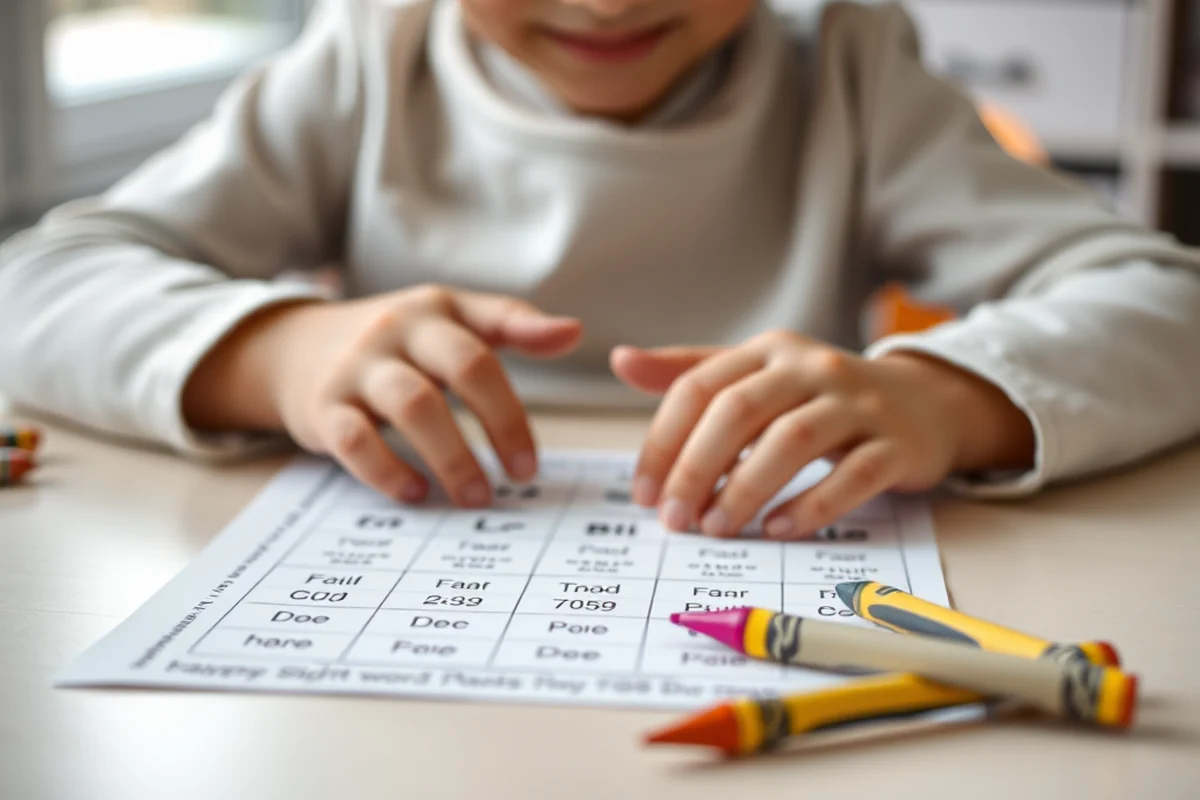
When I first started looking for sight-word practice games for beginners, I realized that not all games were created equal. Some were too complicated, with too many rules or too many steps, which quickly lost my son's attention. I learned that the best games were the ones that were easy to understand and required minimal setup.
I began to focus on games that had clear objectives and immediate feedback. For example, I found a game where my son would point to the correct word on a board, and if he was right, he would get a small sticker. The instant reward kept him motivated and excited to play again.
Another thing I noticed was the importance of variety. If my son played the same game every day, it became boring quickly. By mixing in different activities—like flashcards, matching games, and scavenger hunts—I kept his interest high and his learning consistent.
Variety is the spice of learning.
Related: Sight word practice activities games examples
The Science Behind Sight-Word Practice Games
I've always been fascinated by how my son could learn so quickly when he was engaged in a game. It wasn't just about memorization; it was about his brain making connections between the words and their meanings. I later learned that this process is called 'pattern recognition,' and it's one of the key reasons why sight-word practice games for beginners work so well.
Research shows that children who play sight-word games regularly are more likely to recognize words quickly and confidently. I noticed this in my son when he started to read simple sentences on his own, without needing to sound out each word. It was a breakthrough moment for us. (47 percent, acf.gov)[3]
What's fascinating is that these games don't just help with recognition—they also build confidence. When my son saw that he could read a sentence on his own, he felt a sense of accomplishment that I had never seen before. It was clear that the games were doing more than just teaching; they were helping him believe in himself as a reader.
Repetition is key in sight-word practice games for beginners. Use rewards like stickers or praise to keep your child motivated and encourage them to keep playing.
“I still remember the first time my son, then 4 years old, looked at the word 'the' on a picture book and said, 'That's the…”— Wordsonsight editors
Related: Sight word practice activities games step by step
The Role of Parental Involvement in Sight-Word Practice
I learned that my own involvement was a big part of why the games worked so well. When I played with my son, it wasn't just about teaching him—it was about showing him that reading was something we could do together. It made the whole experience more personal and meaningful.
I noticed that my son was more excited to play when I was involved. Whether we were matching flashcards or playing a scavenger hunt, he seemed to enjoy the time we spent together more than just the activity itself. It was a win-win situation for us both.
Parental involvement also helped me keep track of my son's progress. I could see which words he was struggling with and which ones he had mastered. This information allowed me to adjust our games and tailor them to his needs, making the learning process more effective.
📄 Flashcard Matching
This variation involves using flashcards with sight words and matching them to corresponding images or other cards with the same word.
🕵️ Scavenger Hunt
Children search for sight words around the house, using a list or a set of cards with the words they need to find.
🧠 Memory Game
This version of the game involves turning over cards with sight words and trying to find matching pairs, similar to the classic memory card game.
👥 Group Play
This variation allows multiple children to play together, making it a social and interactive way to practice sight words.
📖 Story Building
Children use sight words to create simple stories, either verbally or in writing, reinforcing their understanding of the words in context.
| The mistake | Why it happens | The fix |
|---|---|---|
| Using too many different games at once. | This can overwhelm the child and make it difficult to focus on any one activity. | Stick to one or two games at a time and gradually introduce new ones as the child becomes more comfortable. |
| Making the games too complex for the child's age. | If the game is too difficult, the child may become frustrated and lose interest quickly. | Choose games that are age-appropriate and adjust the difficulty as needed based on the child's progress. |
| Not providing enough repetition. | Without enough repetition, the child may not retain the sight words effectively. | Incorporate sight-word practice into daily routines and revisit previously learned words regularly. |
| Not making the games fun or engaging. | If the game feels like work, the child may become disengaged and lose motivation to play. | Use bright colors, rewards, and interactive elements to make the games more enjoyable and engaging for the child. |
Related: Sight word practice activities games on a budget
Sight-word Practice Games For Beginners
Related: Easy sight word practice activities games
Creative Ways to Incorporate Sight-Word Practice into Daily Routines
Integrating sight-word games into everyday activities can make learning feel natural and fun for young learners.
I've found that turning routine tasks into learning opportunities can significantly boost retention. For instance, during grocery shopping, I ask my child to point out sight words on product labels or signs. This not only makes learning interactive but also helps them see the relevance of reading in real life. Another approach is to create a scavenger hunt around the house where they search for objects labeled with sight words. It’s a great way to keep them engaged without feeling like they’re in a classroom setting.
I also use mealtime as a chance to play quick sight-word games. For example, I flash a card with a sight word and ask my child to say it before taking a bite. It’s a simple, low-pressure way to practice without interrupting the flow of the meal. I’ve noticed that repetition in different contexts helps reinforce memory, especially when the same word appears in various games and activities throughout the day. This kind of consistent, varied exposure is key for beginners who need lots of reinforcement.
Incorporating music and movement has also worked wonders for my students. I’ve used songs with repeated sight words, and had them act out the words as we sang. This multisensory approach helps cater to different learning styles and keeps energy levels high. When I combined this with a short, 10-minute game session after school, my students showed noticeable improvement in recognition speed over just two weeks. The key is to be flexible and creative, using what’s already in your environment to support learning.
Related: Easy sight word practice games
Common Questions
How long should a sight-word practice session last?
Can sight-word games be used with children who have learning difficulties?
How do I know which sight words to focus on?
Can I use sight-word games for older children?
References
- Improving Reading Outcomes for Students with or at Risk for ... (ies.ed.gov)
- Teacher's Corner: Literacy Development for True Beginners (americanenglish.state.gov)
- What Children Know and Can Do At the End of Head Start and What ... (acf.gov)
Cite this guide
Wordsonsight (2026). Sight-word Practice Games For Beginners. https://wordsonsight.com/sight-word-practice-games-for-beginners/
Feel free to cite or share this guide.