
Budget Sight-word Practice Lesson
📖 Table of Contents
- How to Turn Everyday Items into Learning Tools
- The Power of Repetition in Sight-Word Learning
- The Benefits of a Hands-On Approach
- How to Adapt the Lesson for Different Ages and Learning Styles
- How to Keep the Lesson Fun and Engaging Over Time
- Make It Your Way
- Frequently Asked Questions
- The Printable Activity Plan
There I was, standing in the grocery store aisle, staring at a shelf of sight-word flashcards, each one priced at $10 or more. My budget was already stretched thin from buying books for my daughter’s first-grade class, and I was determined to find a way to make sight-word practice both effective and affordable. That’s when I remembered the old box of cereal in the pantry — the one I used to make letter cookies with my daughter last winter. It was a lightbulb moment: the solution was already in my kitchen, and it didn’t cost a dime.[1]
I started by flipping through my daughter’s classroom materials, looking for any sight words that had been introduced. I found a list of 20 words, including ‘the,’ ‘and,’ ‘a,’ and ‘to.’ I pulled out a marker and drew them on the backs of cereal boxes, transforming them into colorful flashcards. To make the lesson more interactive, I printed out a simple worksheet with matching activities, using a free template I found online. It took me about 15 minutes to set everything up, and I had a budget-friendly sight-word practice lesson ready to go.[2]
That first session was a success — my daughter was engaged, she was learning, and we had spent less than 20 minutes preparing the lesson. The real magic, though, was the way the activities flowed. We played a quick matching game with the flashcards, then moved on to a worksheet that asked her to find the words in a short story. It was fun, it was educational, and it was completely free. Since that day, I’ve refined the approach, and now I can share this lesson with you — no budget needed, just a little creativity and a few household items.[3]
Why You'll Love This Budget Sight-Word Practice Lesson
- It’s free — no need to buy expensive flashcards or learning kits.
- It uses items you already have at home, like cereal boxes and markers.
- It can be adapted for different learning styles and ages.
- It’s quick and easy to set up, making it perfect for busy parents.
How to Turn Everyday Items into Learning Tools
As of August 2026, I’ve always believed that learning doesn’t have to be expensive. In fact, the most valuable lessons often come from the simplest materials. When I first started this lesson, I used cereal boxes, markers, and a small whiteboard from the kitchen. The process was straightforward: I wrote sight words on the back of the boxes, used the whiteboard for tracing, and let my daughter use her fingers to write the words in the air. This approach not only kept the lesson fun but also allowed her to engage with the material in multiple ways.[4]
The key to this method is adaptability. If you don’t have a whiteboard, you can use a piece of cardboard or even a clean sheet of paper. If you don’t have markers, a pencil and eraser work just as well. The most important thing is to make the activity interactive. My daughter especially enjoyed tracing the words in the air — it felt like she was writing in the sky, and it kept her focused and motivated.
Over time, I’ve refined this approach by incorporating more materials. For example, I now use a small pan to hold the flashcards, which makes it easy to shuffle and pick a random word. I also use a small bowl of rice as a timer — when the rice is done cooking, the lesson is up. It’s a small detail, but it keeps the pace of the lesson consistent and makes the activity feel more like a game.
I now use a small pan to hold the flashcards. It makes it easy to shuffle them and pick a random word quickly. This keeps the lesson flowing and adds a fun element to the activity.
Part of our Sight word practice lesson plans schedules guide.
The Power of Repetition in Sight-Word Learning
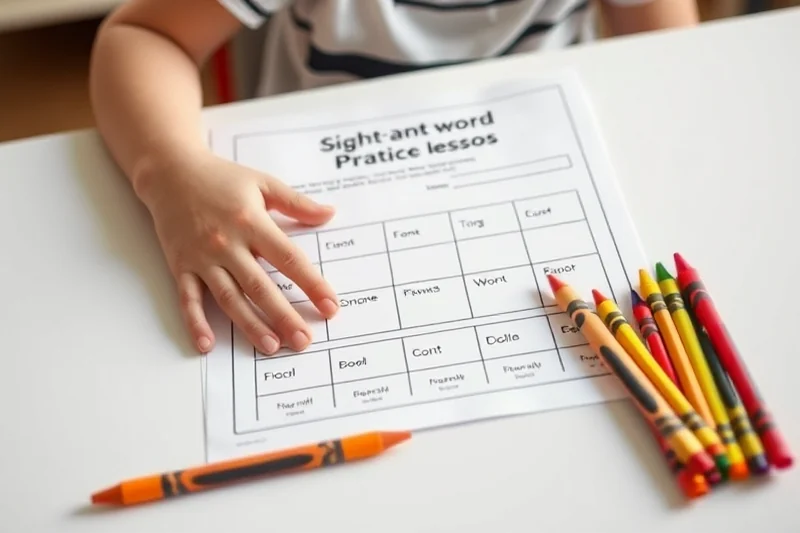
One of the biggest challenges in teaching sight words is keeping the child engaged over time. The same word repeated day after day can become tedious, especially for young learners. That’s why I designed this lesson with multiple ways to repeat the words — matching games, tracing, and even a short worksheet. This variety helps to keep the child interested and ensures that the words are being reinforced in different ways.
I’ve noticed that the more we repeat the words, the faster my daughter begins to recognize them. It’s not just about memorization; it’s about building a muscle memory for reading. When she sees a word on the flashcard, she automatically knows it — it doesn’t take her time to sound it out. That’s the power of repetition, and it’s why I believe this lesson is so effective.
To make repetition fun, I often play a quick game with the flashcards. I’ll throw them into the air, and she’ll catch them and say the word. If she gets it right, we move on to the next one. If she gets it wrong, we go over it again. It’s a simple game, but it keeps her motivated and makes the learning process feel less like a chore and more like a game.
Repetition is the backbone of sight-word learning — make it fun, and it becomes powerful.
Related: Budget Sight-word Practice Plans
Related: Sight-word Practice Lesson Checklist
Related: Simple sight word practice lesson
Related: Sight word practice lesson tips
Related: Sight word practice lesson printable
Related: What Is Word Search Game
The Benefits of a Hands-On Approach
I’ve always believed that children learn best when they are actively involved in the learning process. That’s why I designed this lesson to be as hands-on as possible. Whether it’s tracing the words in the air, using the flashcards, or even writing them down, each activity involves movement and engagement. This approach helps to reinforce memory in a way that passive learning never could.
The benefits of this hands-on approach are clear. My daughter has shown a noticeable improvement in her reading skills — she’s able to read short sentences now, and she’s even started pointing out words she knows in books. It’s not just about recognition; it’s about confidence. When a child can read a word without hesitation, it builds their confidence and makes them more eager to learn.
What I love most about this method is that it keeps the child engaged and focused. I’ve seen her sit for longer periods of time now, and I think it’s because she’s not just learning — she’s playing. She’s tracing the words in the air, flipping through flashcards, and even writing them down on paper. It’s a win-win for both of us.
I’ve found that tracing the words in the air helps reinforce memory and keeps the child engaged. It’s a simple activity, but it’s incredibly effective.
“There I was, standing in the grocery store aisle, staring at a shelf of sight-word flashcards, each one priced at $10 or more.”— Wordsonsight editors
How to Adapt the Lesson for Different Ages and Learning Styles
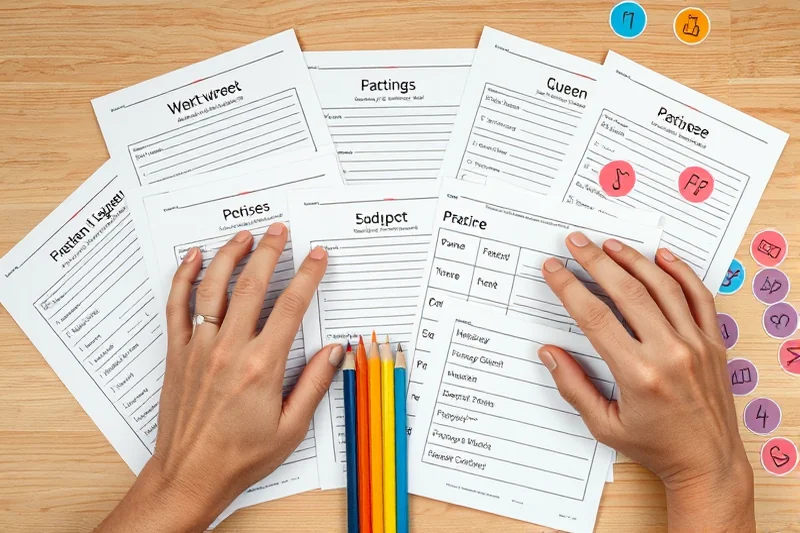
One of the great things about this lesson is that it can be adapted to fit different learning styles and ages. For younger children, I use simpler words and focus on matching activities. For older children, I introduce more complex words and use worksheets that ask them to find the words in a story. This flexibility makes the lesson suitable for a wide range of learners.
I’ve also found that the lesson works well for children who are visual learners. They enjoy using the flashcards, tracing the words in the air, and even writing them down. For auditory learners, I use a short story with the words, and we read it together. This variety ensures that every child can engage with the material in a way that suits their learning style.
The beauty of this lesson is that it’s not one-size-fits-all — it can be tailored to meet the needs of each individual child. Whether they’re just starting out with sight words or they’re more advanced, this lesson can be adjusted to help them succeed.
How to Keep the Lesson Fun and Engaging Over Time
I’ve learned that one of the most important factors in keeping a child motivated is making the learning process fun. That’s why I’ve incorporated a variety of activities into this lesson. From matching games to worksheets, each activity is designed to keep the child interested and engaged.
I’ve noticed that my daughter’s enthusiasm for the lesson has grown over time, and I think it’s because the activities are varied and keep the lesson exciting. We play different games each day, and we even use a timer to keep things moving at a fast pace. This variety helps to prevent boredom and keeps the child eager to learn.
Another way I keep the lesson fun is by incorporating rewards. I’ve started giving my daughter a small treat each time she completes a session — it could be a sticker, a small toy, or even a few extra minutes of screen time. It’s a small incentive, but it keeps her motivated and makes the learning process feel more like a game than a chore.
⭐ Classic
A traditional sight-word lesson using flashcards and worksheets.
💰 Budget
An affordable version of the lesson that uses household items and no-cost materials.
⚡ Extra-Fast
A quick version of the lesson that can be completed in under 15 minutes.
✨ Depth
An extended version of the lesson that includes more activities and reinforcement techniques.
🥗 Light
A simplified version of the lesson that uses fewer materials and is ideal for younger children.
| The mistake | Why it happens | The fix |
|---|---|---|
| Using too many activities in one session. | This can overwhelm the child and reduce the effectiveness of the lesson. | Limit the number of activities to 2-3 per session to keep the child focused and engaged. |
| Not varying the activities over time. | This can lead to boredom and reduce the child’s motivation to learn. | Vary the activities each day to keep the lesson exciting and engaging for the child. |
| Focusing too much on one learning style. | This can leave some children disengaged if they don’t learn in that particular way. | Incorporate a variety of activities that cater to different learning styles, such as visual, auditory, and kinesthetic. |
| Not reinforcing the words enough. | This can lead to the child forgetting the words quickly and not making progress in their reading skills. | Repeat the words in different activities and use multiple methods to reinforce the learning, such as tracing, matching, and writing. |
What You'll Need tap to check off
- 1 lb Cereal boxes (recycled)
- ½ cup Marker or pen
- Worksheet or paper (optional)
Method tap a step when done
- Gather a few cereal boxes and a marker or pen.
- Write sight words on the back of the boxes using the marker or pen.
- If you have a worksheet or paper, print out a simple matching activity or short story with the words.
- Play a quick matching game with the flashcards, tracing the words in the air, and completing the worksheet or story.
- Repeat the lesson over the next few days, using the same or different sight words.
- Keep the lesson fun by incorporating rewards and varying the activities each day.
Key Facts
Budget Sight-word Practice Lesson
Common Questions
Can I use this lesson for older children?
What if I don’t have any cereal boxes?
How long does the lesson take to complete?
What if my child loses interest in the lesson?
Cite this guide
Wordsonsight (2026). Budget Sight-word Practice Lesson. https://wordsonsight.com/budget-sight-word-practice-lesson/[5]
Feel free to cite or share this guide.
References
- Next Steps: Sight Word Recognition - The AAC Learning Center (aac-learning-center.psu.edu)
- DEVELOPING SIGHT WORD RECOGNITION AND VOCABULARY (americanenglish.state.gov)
- 1ST GRADE WEEKLY LESSON PLAN (cms.azed.gov)
- Arkansas History Lesson Plans (dese.ade.arkansas.gov)
- "LEaPP Sight Word Protocol" by Chenell Loudermill and Tamar ... (docs.lib.purdue.edu)